

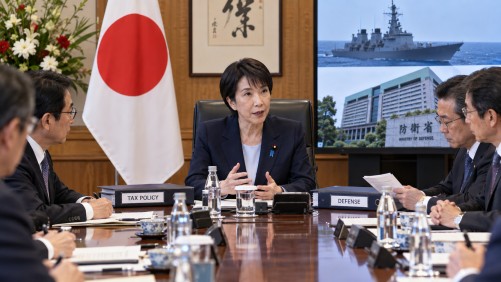
Japan’s newly reshuffled Cabinet, under Prime Minister Sanae Takaichi, is preparing to tackle significant economic and diplomatic challenges in the coming months. As the Cabinet gears up to begin work in October, a primary focus will be on introducing legislation aimed at reducing the consumption tax on food items and implementing income-linked cash payments. These legislative efforts are expected to be prioritized during an extraordinary session of the Diet scheduled for early next month.
Despite the ambitious agenda, Takaichi’s ruling coalition, consisting of the Liberal Democratic Party and Nippon Ishin, lacks a majority in the Upper House, necessitating collaboration with opposition parties to pass crucial legislation. Finance Minister Satsuki Katayama, who has retained her position in the Cabinet, will spearhead these economic initiatives, which also include reducing the number of Lower House seats, a reform sought by the Nippon Ishin party.
On the international front, Foreign Minister Toshimitsu Motegi and Defense Minister Shinjiro Koizumi have been retained as Japan navigates its complex relationships with China and the United States. A significant upcoming diplomatic engagement for Prime Minister Takaichi will be attending the Asia-Pacific Economic Cooperation summit in Shenzhen, China, in November, amid ongoing tensions with China, particularly concerning Taiwan-related security issues.
In addition to economic and diplomatic endeavors, Japan’s defense policies are under scrutiny, with plans to revise the country’s three national security documents, including the National Security Strategy, by the end of the year. This revision is essential for guiding Japan’s foreign and defense policies in the face of evolving regional security dynamics.
The government also faces the challenge of increasing defense spending while ensuring that the financial burden on the public remains manageable. At the same time, Prime Minister Takaichi is advocating for constitutional reform, though progress on crafting specific amendment proposals has been limited so far.
