

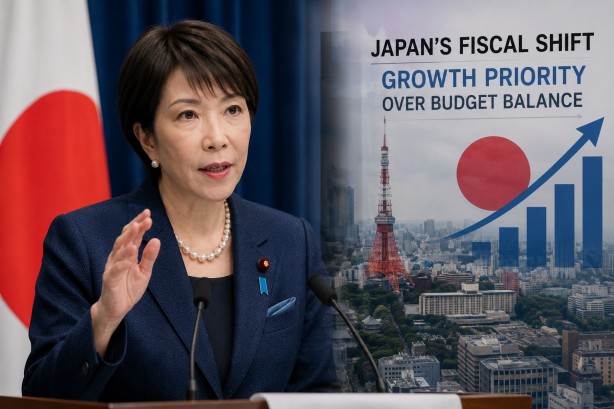
Japan’s government has unveiled a landmark economic policy that marks a departure from its traditional emphasis on fiscal consolidation. Under the leadership of Prime Minister Sanae Takaichi, the new approach is set to prioritize economic growth and fiscal sustainability over achieving a primary budget surplus within a single year. This policy aims to gradually lower the public debt-to-GDP ratio, a shift supported by a comprehensive plan to mobilize over ¥370 trillion in public and private investment by 2040, focusing on strategic sectors such as artificial intelligence.
In a bid to stimulate the economy, the new strategy also suggests temporary reductions in food consumption taxes and plans to boost defense spending. However, these proposals have sparked concerns regarding their financing mechanisms. Economists have cautioned that the success of this ambitious strategy is contingent on sustained economic growth and maintaining low interest rates, both of which are uncertain variables in the current economic climate.
The government’s shift in economic policy signals a broader commitment to fostering long-term fiscal health rather than short-term budgetary metrics. By setting a target to reduce the debt-to-GDP ratio, Japan aims to address its fiscal challenges while encouraging investment in burgeoning industries. This move is seen as critical for maintaining the nation’s economic vitality amid evolving global economic dynamics.
As Japan embarks on this new fiscal journey, financial markets are expected to keep a watchful eye on upcoming budgetary decisions. Analysts and investors will be keen to evaluate whether the government’s expansive spending plans can be effectively balanced with the objective of long-term fiscal stability. The outcome of these decisions will likely have significant implications for Japan’s economic trajectory and fiscal credibility in the years to come.
