

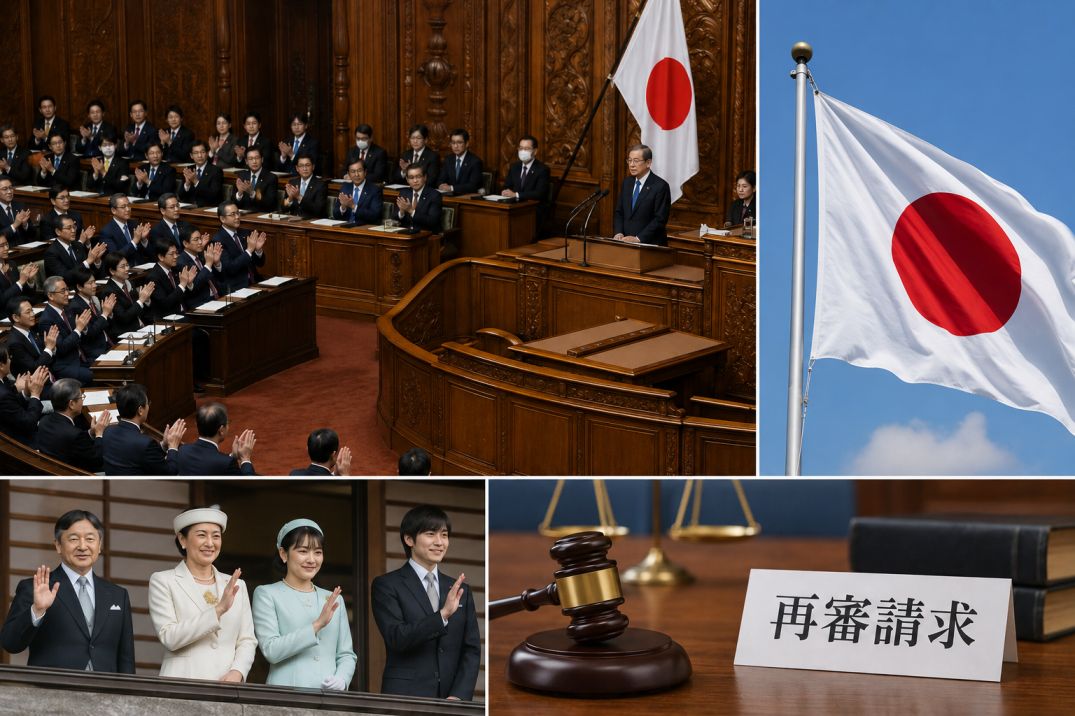
Japan has ushered in significant legislative changes with the approval of three key laws, marking the first major revision of the Imperial House Law since 1947, alongside new measures addressing national flag desecration and reforms to the criminal retrial process. The updated Imperial House Law is set to allow female members of the royal family to maintain their status after marriage, as well as enable the adoption of male descendants from former branch families, a move designed to bolster the imperial succession framework.
In a bid to safeguard national symbols, Japan’s parliament has also enacted a law making public desecration of the national flag a criminal act. Those who violate this law may face penalties of up to two years in prison or a fine of 200,000 yen. Proponents of the legislation argue it is essential for protecting the country’s symbols, while detractors express concerns that it might impinge on freedom of expression.
Additionally, significant reforms have been made to Japan’s criminal retrial process, intended to expedite the review of wrongful conviction cases. Despite the passage of these reforms, some opposition parties have voiced objections, arguing that the changes do not adequately ensure transparency or the disclosure of evidence.
These legislative updates reflect Japan’s ongoing efforts to address both cultural and judicial concerns within the country. By adjusting the Imperial House Law, the government aims to modernize the imperial family structure to better fit contemporary needs. Meanwhile, the flag desecration law and retrial process reforms demonstrate a balancing act between preserving national identity and improving the justice system.
