

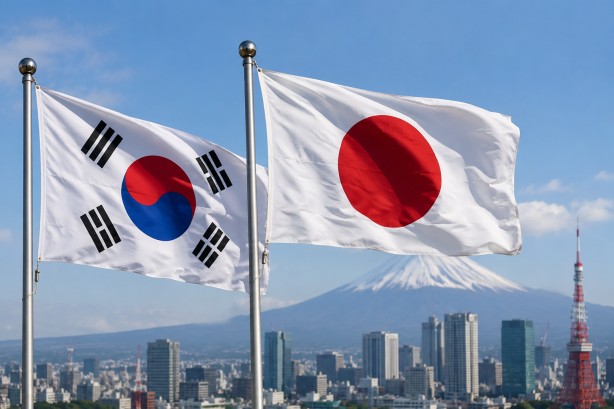
Under the leadership of Prime Minister Sanae Takaichi, Japan’s political landscape is becoming increasingly conservative, posing new challenges for its relationship with South Korea. This shift raises concerns that longstanding historical and territorial disputes might jeopardize recent diplomatic cooperation between the two nations. Historically, South Korea and Japan have adopted a “two-track” approach, allowing them to separate sensitive historical issues from areas where closer collaboration is necessary, such as security and economic matters. However, a recent report from South Korea’s Institute for National Security Strategy suggests that Japan’s political instability and its shift to the right could potentially undermine the progress made in bilateral diplomacy.
Tensions have flared following visits by Japanese politicians to the Yasukuni Shrine, a site seen as controversial by many, and Japan’s renewed assertions over the territory known as Dokdo in South Korea and Takeshima in Japan. These actions have stirred diplomatic unease, as the shrine visits coincide with the anniversary of Japan’s World War II surrender on August 15. While Prime Minister Takaichi refrained from visiting the shrine, she did send a ritual offering, and several senior Japanese officials attended, sparking formal protests from the South Korean government.
South Korean President Lee Jae Myung has responded with a more balanced stance, acknowledging historical grievances yet underscoring the necessity of continued cooperation between the two countries. As tensions simmer, experts caution that unresolved disputes over historical issues, territorial claims, and wartime controversies could erode the effectiveness of the “two-track” strategy. This approach is crucial for maintaining and expanding practical cooperation, and both countries need to make tangible progress to prevent diplomatic relations from deteriorating.
The bilateral tensions underscore the complex web of historical sensitivities and the need for both nations to navigate these carefully while fostering collaboration in areas of mutual interest. The ongoing challenges reflect the delicate balance both countries must maintain to ensure that contentious historical and territorial issues do not overshadow the benefits of strategic collaboration on security and economic fronts. As both South Korea and Japan continue to engage in dialogue, the outcomes of these diplomatic efforts will significantly impact regional stability and bilateral relations.
