

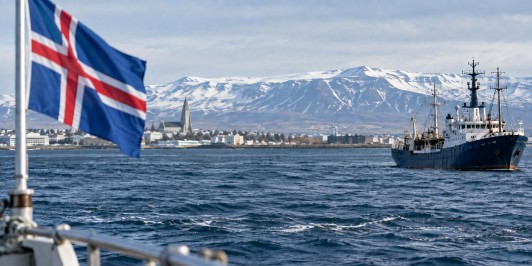
Iceland is moving forward with plans to introduce a permanent ban on commercial whaling, setting the stage for significant change in the global whaling landscape. This legislative proposal, expected to reach parliament by February, would effectively halt Iceland’s controversial whaling industry, which has long been a target of criticism from animal welfare and conservation groups. Should this measure pass, it will leave Japan and Norway as the last nations engaged in commercial whaling practices.
The proposed legislation arrives after extensive debate over the ethical, environmental, and conservation issues linked with whaling. Iceland’s whaling industry primarily targets fin whales, a species classified as vulnerable. Despite a government-approved quota, the practice has faced increasing opposition due to concerns over the sustainability and morality of hunting these marine giants.
Iceland resumed commercial whaling in 2006, defying an international moratorium implemented in 1986 aimed at safeguarding whale populations. Norway followed suit in 1993, while Japan exited the International Whaling Commission in 2019, subsequently resuming commercial whaling within its territorial waters and exclusive economic zone. If Iceland succeeds in enacting this ban, the spotlight will intensify on Japan and Norway as the remaining countries engaged in this contentious industry.
The international moratorium on commercial whaling does not extend to certain indigenous communities, such as those in parts of Greenland and Alaska, who are permitted to hunt whales for cultural, nutritional, and traditional purposes. However, this exception underscores the growing global consensus against commercial whaling, which has encountered staunch opposition from various environmental and animal rights organizations.
As Iceland positions itself to potentially exit the commercial whaling scene, this legislative move could serve as a pivotal moment in the efforts to end commercial whaling worldwide. The proposed ban underscores a shifting perspective towards greater conservation efforts and ethical considerations in marine wildlife management, reinforcing the growing call for sustainable practices and the protection of vulnerable species.
