

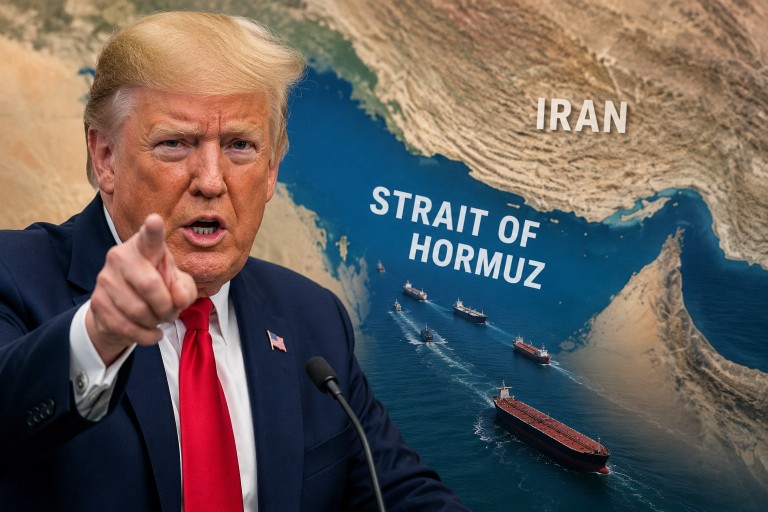
US President Donald Trump has issued a bold warning, suggesting that the United States might soon declare the Strait of Hormuz as its territory, amid ongoing tensions with Iran. During a speech in New York on Friday, Trump indicated that this declaration could follow what he described as an eventual defeat of Iran. He also asserted that the US effectively controls this crucial maritime passage through a blockade.
The Strait of Hormuz is a vital artery for global oil transportation, with approximately 20% of the world’s seaborne oil passing through it. Situated between Iran and Oman, this strategic waterway has faced significant disruptions since the onset of military operations against Iran by the US and Israel. Trump’s statements have left observers questioning whether this marks a shift in official US policy or merely serves as a political maneuver.
In response, Iran has firmly dismissed Trump’s threat. Kazem Gharibabadi, Iran’s Deputy Foreign Minister, emphasized that the country would not succumb to US pressure, reaffirming that any decisions regarding the strait’s operation remain within Iranian jurisdiction. Additionally, Iranian Foreign Minister Abbas Araqchi clarified that Tehran has not committed to resuming formal negotiations with Washington, despite messages being exchanged through intermediaries like Qatar and Pakistan.
Iran has set forth several conditions for reopening the strait to shipping, including demands for compensation for war damages, the lifting of US sanctions, and the release of frozen Iranian assets. The prolonged blockade has exacerbated global fuel prices, placing additional financial strain on consumers. President Trump has defended these price hikes, arguing that the increased cost is a necessary measure to prevent Iran from developing nuclear weapons.
The impasse over the Strait of Hormuz continues to pose significant risks to global energy supplies, with widespread concern about the broader economic implications of the conflict. As tensions persist, the international community remains watchful of further developments in the region.
