

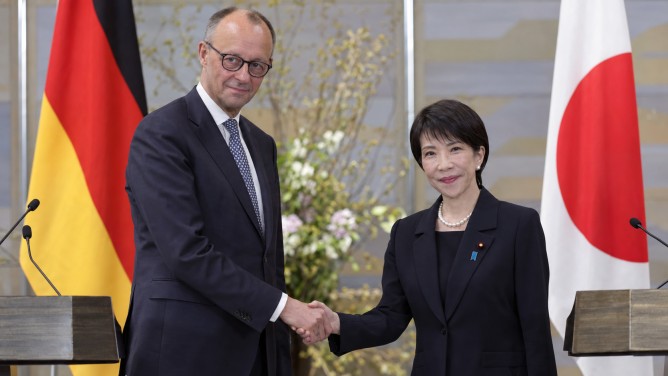
Japan has expressed concerns that Germany’s potential involvement in the Global Combat Air Programme (GCAP), a collaborative fighter jet project with Britain and Italy, may result in delays for developing its next-generation combat aircraft. This apprehension follows talks on October 28 between German Chancellor Friedrich Merz and Japanese Prime Minister Sanae Takaichi in Tokyo, where Merz indicated an interest in exploring possibilities for cooperation in fighter aircraft development.
The GCAP aims to create an advanced fighter jet by 2035, and currently involves Japan, Britain, and Italy. However, Japan’s defense ministry worries that integrating Germany into the project might necessitate revising the current division of responsibilities, potentially disrupting the timeline. A source from the Japanese Defence Ministry noted that Germany’s entry could require renegotiation of the work-sharing arrangements established by the three partners.
Britain appears to be in favor of Germany’s participation, which could help alleviate development costs and lower the aircraft’s unit price by increasing potential orders. Meanwhile, Japan intends to engage in discussions with Britain and Italy to assess the extent of Germany’s possible involvement in the project.
One consideration under discussion is allowing Germany to join as an observer. This arrangement would enable Germany to exchange information and potentially purchase the aircraft in the future without affecting the current development schedule. The outcome of these consultations will be critical in determining the path forward for the GCAP initiative.
