

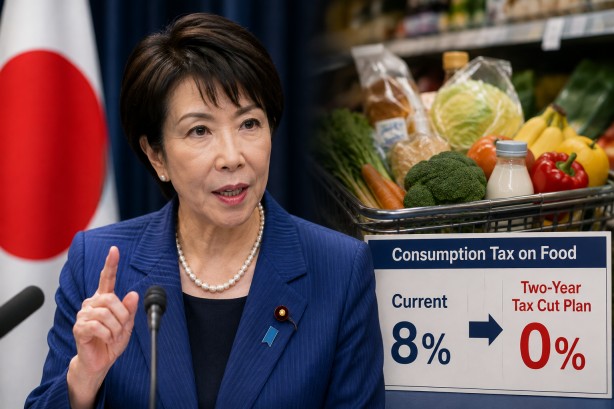
Japanese Prime Minister Sanae Takaichi has put forward a proposal aimed at alleviating cost-of-living pressures by cutting the consumption tax on food to nearly zero for a two-year period. The plan seeks to reduce the current food tax rate from 8% to 1%, beginning in April 2027. Takaichi intends to gain Cabinet approval for the measure next week, with hopes for parliamentary passage later in the year.
The proposed tax cut is designed to benefit middle- and low-income households, with additional income-linked benefits intended to cover the remaining tax burden. Takaichi has assured that the tax cut would be strictly temporary, concluding after two years.
Despite its intentions, the proposal has met with significant opposition within the ruling Liberal Democratic Party (LDP). Critics are particularly concerned about the plan’s estimated cost of ¥10 trillion ($62.25 billion) and the absence of a clearly defined funding source. This has led to skepticism among fiscal conservatives about whether the tax rate can be effectively reinstated after the two-year reduction period.
The debate over the proposal highlights a broader discussion within the LDP about fiscal responsibility and economic strategy, particularly as Japan navigates complex economic challenges. While the tax cut is designed to provide immediate relief to struggling households, its long-term financial implications remain a contentious issue among policymakers.
