

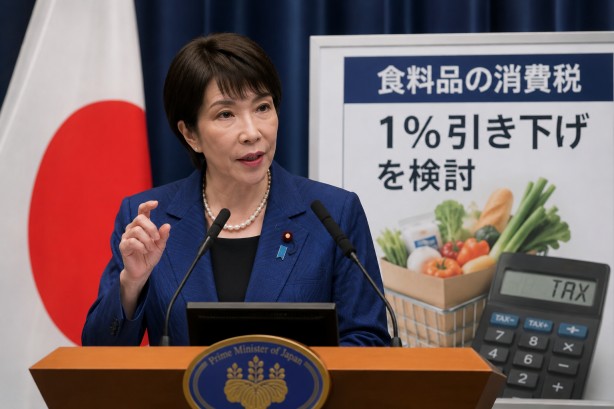
Japanese Prime Minister Sanae Takaichi is poised to direct the ruling Liberal Democratic Party to proceed with a significant proposal aimed at easing the financial burden on households. The plan involves reducing the consumption tax on food items from the current 8% to a mere 1% for a two-year period starting in April 2027. This initiative emerges as a response to a stalemate in cross-party discussions on tax reform, highlighting the government’s commitment to providing relief amidst economic challenges.
Amidst ongoing negotiations, the government and ruling coalition have thrown their support behind this temporary tax reduction, complementing it with cash assistance targeted at low- and middle-income families. The comprehensive proposal includes a substantial financial package of approximately ¥600 billion, designed to alleviate the cost-of-living challenges faced by many citizens. This dual approach underscores the administration’s focus on addressing both immediate and long-term economic pressures.
The government has set its sights on finalizing the details of this policy by early August. In preparation for its implementation, the necessary legislation is expected to be introduced during an extraordinary parliamentary session later this year. This strategic planning aims to ensure that the tax cut takes effect seamlessly by the set deadline of April 2027, offering timely relief to consumers.
As the government navigates the complexities of tax reform, this proposed tax cut represents a pivotal step in its broader strategy to stimulate the economy and support struggling households. By reducing the tax on essential food items, the administration aims to directly impact the daily expenses of families, thereby reinforcing consumer confidence and spending power.
