

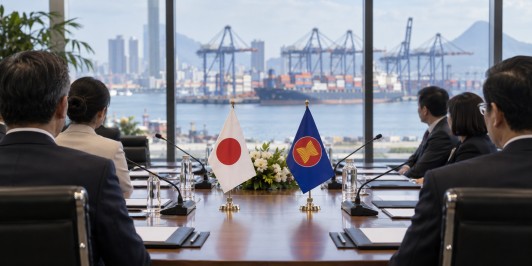
Japan and the Association of Southeast Asian Nations (ASEAN) are set to explore enhancing their economic partnership agreement, focusing on strengthening supply-chain resilience, energy security, and the integration of artificial intelligence into the economy. This decision emerged from discussions at a meeting of economic ministers in Manila on September 20.
The move to review the existing agreement, which was initially enacted in 2008 and later expanded to include trade in services and investment, comes as both parties seek solutions to global supply chain vulnerabilities and energy supply challenges, particularly in light of disruptions affecting key routes in the Middle East. Japan reaffirmed its commitment to helping ASEAN countries bolster their oil stockpiles as part of this regional energy security effort.
With geopolitical tensions and global trade uncertainties as a backdrop, Japan and ASEAN ministers emphasized the necessity for tighter economic cooperation. The region’s economic landscape is increasingly influenced by AI, prompting both parties to consider how best to incorporate technological advancements into their updated agreement.
In 2025, two-way merchandise trade between Japan and ASEAN reached $245.4 billion, with Japanese investments in the region totaling $9.5 billion. These figures underscore the importance of the partnership and the potential benefits of an updated agreement that addresses modern economic challenges.
