

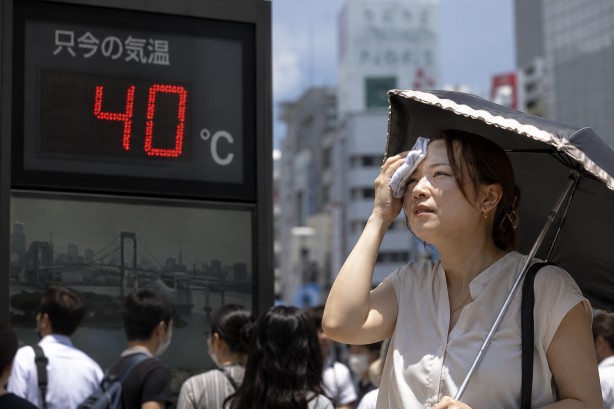
On July 21, Japan sweltered under a powerful high-pressure system that drove temperatures soaring above 40°C in parts of the country, continuing a trend of extreme heat that has persisted for nine consecutive years. This marks the first instance since April of using the term “kokushobi,” meaning “cruelly hot days,” to describe such blistering conditions.
Tajimi, a city in Gifu Prefecture, recorded the highest temperature of the day at 40.3°C, with nearby Gujo also reaching 40°C. Meanwhile, in Aichi Prefecture, the city of Toyota experienced a temperature climb to 40.1°C. These figures reflect the severe intensity of the heatwave affecting both eastern and western regions of Japan.
By the middle of the afternoon, temperatures had soared to at least 35°C at 255 out of Japan’s 914 weather observation stations, underscoring the widespread impact of this heatwave. The persistent high temperatures have prompted authorities to take action to protect public health.
In response to the alarming heat levels, the Environment Ministry, along with the Japan Meteorological Agency, issued heatstroke alerts for 42 prefectures, the highest number of such warnings this year. Officials strongly advised residents to utilize air conditioning, maintain hydration, and ensure adequate salt intake to mitigate the risk of heat-related illnesses.
