

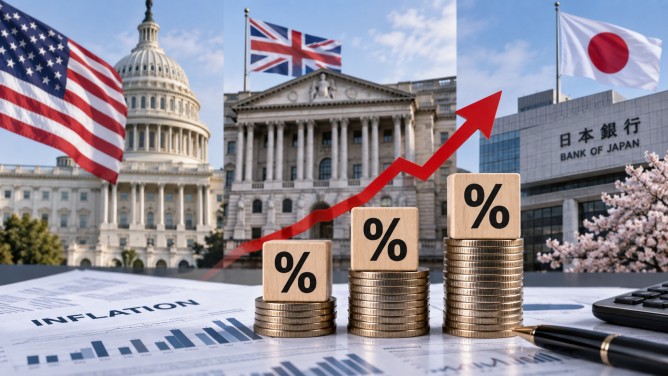
As central banks in the United States, United Kingdom, and Japan brace for significant policy announcements this week, rising concerns over inflation and energy prices are casting a spotlight on potential interest rate adjustments. The Federal Reserve, in particular, faces mounting pressure as escalating oil prices threaten to push U.S. inflation further beyond its 2% target. This increase in energy costs is largely attributed to the ongoing conflict involving Iran and disruptions at the strategic Strait of Hormuz.
The latest figures show U.S. inflation at 3.4% annually, well above the Federal Reserve’s objective. Fed Chair Kevin Warsh has suggested that further action may be necessary if inflation does not continue aligning with the target. Despite President Donald Trump’s repeated calls for lower interest rates, the Federal Reserve is expected to carefully evaluate the risks of inflation before determining its next steps.
In the United Kingdom, the Bank of England is anticipated to maintain its interest rate at 3.75% during their upcoming meeting. However, stronger-than-expected economic growth coupled with renewed energy price pressures have heightened concerns that inflation could persist at elevated levels. Some members of the Bank’s Monetary Policy Committee have already advocated for higher rates, suggesting that policymakers might take a more aggressive approach even if rates stay unchanged.
Japan is also on the cusp of a notable rate decision, with the Bank of Japan expected to increase its policy rate by 0.25 percentage points to 1.25%, a level not reached in over thirty years. This potential rate hike follows the yen’s strengthening, attributed to measures by both Japanese and U.S. authorities to bolster the currency.
The European Central Bank has already moved to raise interest rates, citing ongoing inflationary pressures partially linked to the Middle East conflict. As oil prices remain high and global bond markets experience renewed volatility, investors are keenly observing this week’s central bank decisions for insights into how major economies will navigate the delicate balance between inflation risks and economic growth.
