

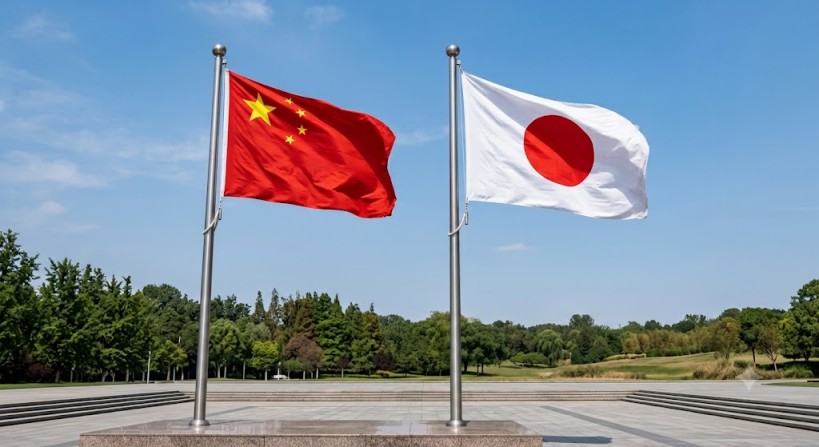
China has imposed new export controls on 40 Japanese entities, citing concerns over Japan’s military advancements and what it describes as “remilitarization” efforts. The restrictions affect 20 companies and divisions linked to major Japanese firms, barring Chinese and foreign exporters from selling certain dual-use goods that could be utilized for both civilian and military applications.
In addition to these controls, another set of 20 Japanese entities has been placed on a watch list. Exporters dealing with these entities must now obtain special approvals, conduct risk assessments, and ensure that their products will not be used for military purposes. Beijing claims these measures are essential to counter what it sees as Japan’s escalating military build-up, particularly in the realm of long-range weapons and enhanced security collaborations with other nations.
Japan has strongly criticized the export controls, labeling them as unacceptable, and has called on China to retract the measures. Japanese officials have indicated that they will evaluate the potential impacts of these restrictions and consider suitable responses. This development comes amid heightened tensions between the two countries, which have risen following Japan’s recent moves to bolster its defense strategy and military capabilities.
China has consistently voiced opposition to Japan’s security policies, especially those related to Taiwan. Analysts suggest that the export restrictions might be intended more as a diplomatic signal than a comprehensive economic measure. Despite this, the relationship between China and Japan remains delicate, with broader regional security concerns contributing to the fragility.
